
By Home Tweakz Team | Home Improvement & Natural Cleaning Experts | Updated 2026
The short answer: Non toxic dishwasher detergent, a healthy dishwasher detergent choice, cleans your dishes just as effectively as conventional brands — without exposing your family to phosphates, chlorine bleach, synthetic fragrances, or chemical residues that linger on the plates, glasses, and utensils you eat from every single day.
Most American households run their dishwasher at least once daily. That means every day, the dishes your family eats from are washed in whatever chemicals are in your detergent — and some of those chemicals do not fully rinse away. Choosing eco friendly dishwasher detergent reduces that ongoing exposure while maintaining excellent cleaning performance.
Switching to non toxic dishwasher detergent is one of the simplest, most impactful changes you can make for your family’s health and for the environment. And in 2026, the options are better than ever — cleaning just as powerfully as conventional brands, without the chemical concerns.
In this complete guide you will discover:
- The 5 most important reasons to switch to non toxic dishwasher detergent
- Which harmful chemicals in dishwasher detergent to avoid in conventional formulas
- The best non toxic dishwasher detergent options available in 2026
- How eco friendly dishwasher detergent compares to conventional brands
- The best non toxic dishwasher pods and plastic free dishwasher tablets
- How to identify truly healthy dishwasher detergents versus greenwashed products
- Long-term cost savings of switching to natural options
Why the Detergent in Your Dishwasher Matters More Than You Think
Most people spend significant time and money choosing safe, healthy food for their families — but never think twice about the chemicals washing the dishes that food is eaten from.
Here is the reality: conventional dishwasher detergents contain a range of synthetic chemicals that do not fully rinse away during the wash cycle. Research has found measurable residues of surfactants and preservatives on dishes after standard dishwasher cycles — meaning your family ingests trace amounts of these chemicals with every meal.
When you understand what is actually in conventional dishwasher detergent, switching to a non toxic dishwasher detergent becomes an obvious choice.

What Is Non Toxic Dishwasher Detergent?
Non toxic dishwasher detergent is a cleaning product formulated without harmful synthetic chemicals — specifically without phosphates, chlorine bleach, synthetic fragrances, artificial dyes, and chemical preservatives. Instead, it uses plant-derived surfactants, mineral-based cleaning agents, and naturally derived enzymes to clean dishes effectively and safely.
Non toxic options are available in every format — non toxic dishwasher pods , non toxic dishwasher tablets, liquid gel, and powder — making the switch seamless regardless of your current detergent format preference.
For a complete guide on maintaining your dishwasher alongside your detergent switch, read our how to clean your dishwasher guide.
Reason 1: Significant Health Benefits for Your Entire Family
The most compelling reason to switch to non toxic dishwasher detergent is straightforward: the chemicals in conventional detergents can harm your health, and the harm accumulates silently over time with every meal eaten from chemically-washed dishes.
Avoiding Harmful Chemicals in Conventional Dishwasher Detergent
Here are the most common harmful chemicals in dishwasher detergent to avoid.
Conventional dishwasher detergents — including many popular name brands — commonly contain these concerning ingredients:
Phosphates Phosphates were once the primary cleaning agent in most dishwasher detergents. While highly effective at cleaning, they are now banned or restricted in most US states due to their devastating environmental impact. Some older formulas still contain them — always check labels.
Chlorine Bleach (Sodium Hypochlorite) Chlorine bleach is used in many conventional dishwasher detergents as a disinfectant and whitening agent. When heated during a dishwasher cycle, it releases chlorine gas fumes that can irritate the respiratory system. Residues left on dishes after the cycle can be ingested with food.
Synthetic Fragrances The word “fragrance” on a detergent label can hide dozens of undisclosed synthetic chemicals, including phthalates — hormone-disrupting compounds linked to reproductive health issues, developmental problems in children, and endocrine disruption. Fragrance chemicals are particularly concerning because they can transfer to food from dishes.
Artificial Preservatives Methylisothiazolinone (MIT) and benzisothiazolinone (BIT) are common preservatives in liquid dishwasher detergents. Both are classified as skin sensitizers and allergens. MIT in particular has been flagged by European regulatory bodies for causing allergic skin reactions.
Alcohol Ethoxylates These surfactants are found in both commercial and household dishwasher products. Research published in scientific literature has found residues of alcohol ethoxylates on dishes after dishwasher cycles — raising concerns about daily ingestion, particularly for people with compromised gut health.
Artificial Dyes Synthetic colorants add no cleaning benefit whatsoever. They are purely cosmetic — and have been linked to allergic reactions, skin irritation, and in some studies, to hyperactivity in children.
What Non Toxic Dishwasher Detergent Uses Instead
Plant-derived surfactants — from coconut, corn, or sugar — clean just as effectively as synthetic alternatives without the health concerns.
Mineral-based builders — sodium citrate, sodium carbonate, and citric acid soften water and prevent limescale without phosphates or chlorine.
Natural enzymes — protease, amylase, and lipase enzymes break down protein, starch, and fat stains at the molecular level — the same mechanism used by conventional detergents, but derived from natural fermentation processes.
Essential oils — for scented options, natural essential oils like lemon, lavender, and eucalyptus provide fragrance without phthalates or synthetic fragrance chemicals.
Impact on Indoor Air Quality
Every time you run your dishwasher, steam and vapors are released into your kitchen air — particularly when you open the door at the end of the cycle. With conventional detergents, these vapors can contain:
- Chlorine gas from bleach-based formulas
- Volatile organic compounds (VOCs) from synthetic fragrances
- Chemical aerosols from surfactant formulas
People with asthma, respiratory sensitivities, or young children are particularly vulnerable to these airborne exposures. Non toxic dishwasher detergent formulated without chlorine bleach and synthetic fragrance eliminates these indoor air quality concerns completely.
Key health benefits of switching:
- Zero chlorine gas exposure during and after cycles
- No synthetic fragrance VOCs released into kitchen air
- No chemical residues on dishes that transfer to food
- Safe for households with babies, young children, and people with allergies
- No hormone-disrupting phthalates from synthetic fragrances
Reason 2: Environmentally Friendly Choices That Make a Real Difference
Beyond personal health, non toxic dishwasher detergent makes a measurable positive difference for the environment — from the ingredients that go down your drain to the packaging that ends up in landfill.
Biodegradability of Non Toxic Ingredients
When you wash dishes with conventional detergent, the chemicals go down your drain, through your wastewater system, and ultimately into rivers, lakes, and the ocean.
Phosphates — still present in some conventional formulas — are particularly destructive. They cause eutrophication: an explosive growth of algae in waterways that depletes oxygen, kills fish, and devastates aquatic ecosystems. This is why phosphates have been banned in dishwasher detergents in most US states — but the damage from decades of use persists.
Synthetic surfactants from conventional detergents biodegrade slowly and can accumulate in aquatic environments, disrupting the hormonal systems of fish and other wildlife.
Non toxic dishwasher detergent uses plant-derived surfactants and mineral ingredients that biodegrade rapidly and completely in wastewater treatment systems. They break down into harmless compounds — water, carbon dioxide, and simple minerals — without leaving persistent chemical residues in the environment.
Plastic Free Dishwasher Tablets — A Game Changer
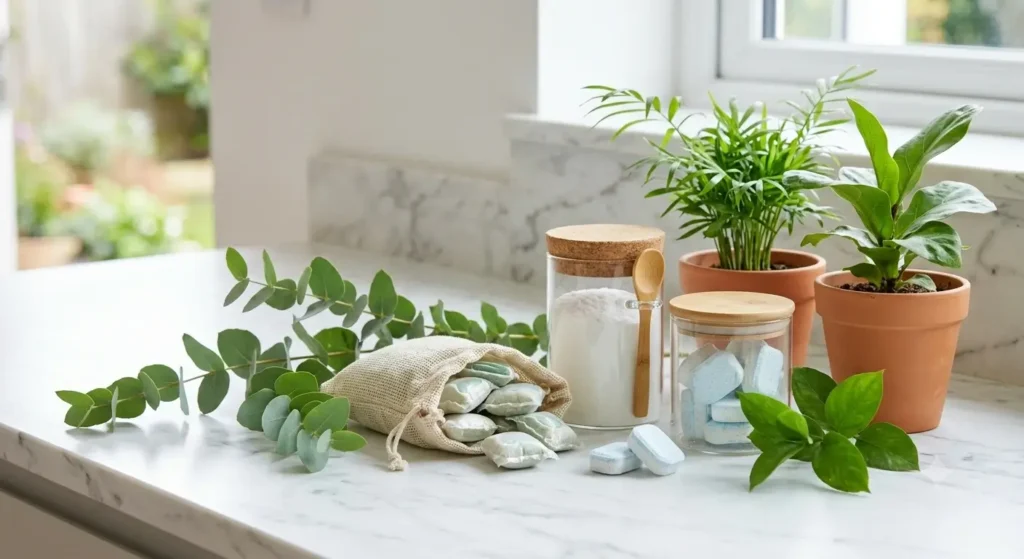
Plastic free dishwasher tablets are one of the most significant environmental innovations in home cleaning products in recent years. Conventional dishwasher pods are wrapped in a polyvinyl alcohol (PVA) plastic film that dissolves in water — but research has raised questions about whether PVA fully breaks down in wastewater treatment systems or persists as microplastics.
Truly plastic free dishwasher tablets come packaged in:
- Cardboard boxes — fully recyclable
- Compostable paper wrapping — breaks down completely
- Bare tablets with no individual wrapping — zero packaging waste
- Concentrated tablets that require less packaging per wash
Best plastic free dishwasher tablet brands in 2026:
- Blueland Dishwasher Tablets — unwrapped tablets in a reusable tin; plastic-free, concentrated, highly effective
- Dropps Dishwasher Pods — PVA-free formula, minimal cardboard packaging, plant-based ingredients
- Eco-Me Dishwasher Tablets — paper-wrapped, plant-based, no synthetic chemicals
- Grove Co. Dishwasher Tablets — plastic-free packaging, plant-based formula, concentrated cleaning
For more natural home solutions that reduce plastic and chemical use throughout your home, explore our budget-friendly home tweakz guide.
Reason 3: Non Toxic Options Are Genuinely Effective — Not a Compromise
The biggest misconception about non toxic dishwasher detergent is that you have to sacrifice cleaning power for safety. This was partially true a decade ago — but in 2026, the best natural dishwasher detergents match or exceed the performance of conventional brands on everyday dishes.
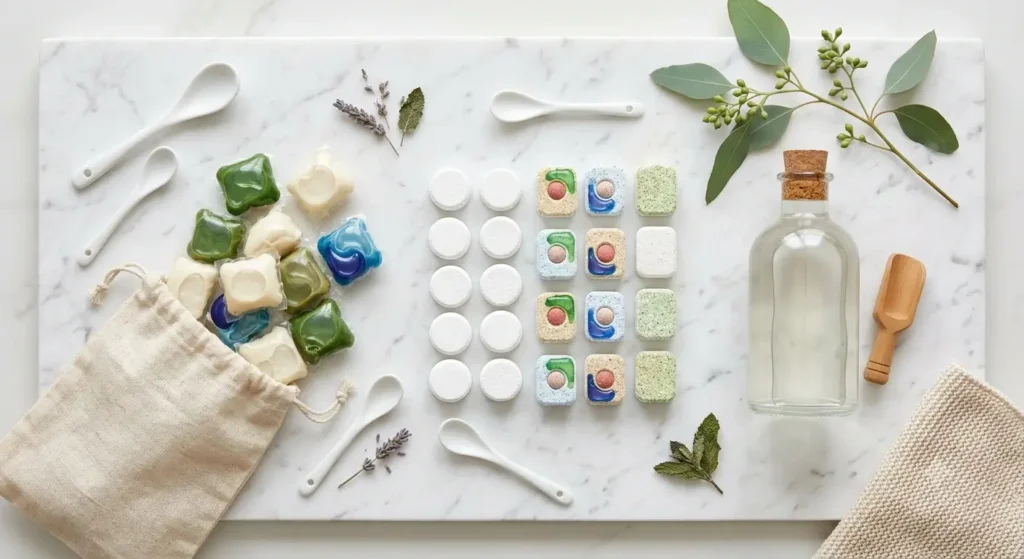
Comparing the Best Non Toxic Dishwasher Detergents in 2026
Best Non Toxic Dishwasher Pods
1. Seventh Generation Dishwasher Detergent Packs — Best Overall Non Toxic Pods
Seventh Generation’s dishwasher packs are USDA Certified Biobased, free from phosphates, chlorine, synthetic fragrance, and artificial dyes. The concentrated formula delivers excellent cleaning performance on everyday dishes, glasses, and cutlery.
- USDA Certified Biobased
- No phosphates, chlorine, or synthetic fragrance
- Plant-based surfactants
- Works in all water temperatures
- Available fragrance-free
Performance: ⭐⭐⭐⭐⭐ Best for: Families wanting reliable daily performance with plant-based ingredients
2. Dropps Dishwasher Pods — Best Eco-Packaging Non Toxic Pods
Dropps has built a strong reputation as one of the most genuinely eco-friendly dishwasher pod brands available. Their formula is plant-based, dye-free, and fragrance-free — and their packaging is 100% cardboard, no plastic.
- Plant-based, dye-free, fragrance-free formula
- 100% plastic-free cardboard packaging
- Concentrated — uses less product per load
- Septic system safe
- Certified by EPA Safer Choice program
Performance: ⭐⭐⭐⭐ Best for: Zero-waste households and eco-conscious families
3. Blueland Dishwasher Tablets — Best Plastic Free Non Toxic Tablets
Blueland’s completely unwrapped dishwasher tablets come in a reusable tin — eliminating both individual pod wrappers and the outer packaging box entirely. The formula is plant-based, free from synthetic chemicals, and highly concentrated.
- Completely unwrapped — zero individual packaging
- Reusable metal tin for storage
- Plant-based, synthetic chemical-free formula
- Concentrated — one tablet per load
- Leaping Bunny certified cruelty-free
Performance: ⭐⭐⭐⭐ Best for: Zero-waste committed households
4. Cascade Free & Clear ActionPacs — Best Mainstream Non Toxic Option
For households wanting a widely available, trusted brand with a cleaner ingredient profile, Cascade Free & Clear ActionPacs deliver excellent cleaning performance with a biobased formula free from dyes and synthetic fragrance.
- Biobased formula — plant-derived cleaning agents
- No dyes or synthetic fragrance
- Excellent cleaning performance — matches conventional Cascade
- Widely available at US retailers
- Recommended by major dishwasher brands
Performance: ⭐⭐⭐⭐⭐ Best for: Households transitioning from conventional brands who want proven performance
5. Ecover Automatic Dishwasher Tablets — Best Non Toxic Tablets
Ecover has been a pioneer in plant-based cleaning products for decades. Their dishwasher tablets use minerals and plant-based ingredients exclusively — no phosphates, no chlorine, no synthetic preservatives.
- 100% plant-based and mineral ingredients
- No phosphates, chlorine, or synthetic preservatives
- Biodegradable formula
- Suitable for septic systems
- Available in bulk packaging
Performance: ⭐⭐⭐⭐ Best for: Long-term eco-conscious households wanting an established natural brand
Tips for Best Performance with Non Toxic Dishwasher Detergent
Complete Comparison Table
| Feature | Non Toxic | Conventional |
|---|---|---|
| Harmful chemicals | ✅ None | ❌ Phosphates, chlorine, synthetic fragrance |
| Chemical residue on dishes | ✅ None | ⚠️ Possible |
| Indoor air quality impact | ✅ Minimal | ⚠️ Chlorine vapors, VOCs |
| Environmental impact | ✅ Biodegradable | ❌ Phosphates, slow-degrading surfactants |
| Plastic packaging | ✅ Often plastic-free | ❌ Plastic pods, plastic bottles |
| Cleaning performance | ✅ Very good to excellent | ✅ Excellent |
| Hard water performance | ✅ With citric acid | ✅ Good |
| Cost per load | $0.25 — $0.50 | $0.25 — $0.45 |
| Safe for babies/children | ✅ Yes | ⚠️ Chemical exposure risk |
| Safe for sensitive skin | ✅ Yes | ⚠️ Fragrance and dye concerns |
| Certifications available | ✅ EPA, EWG, USDA | ⚠️ Limited |
Non toxic detergents perform best when used correctly. Follow these tips for consistently sparkling results:
- Use the hottest cycle available — plant-based enzymes activate most effectively in hot water above 120°F
- Fill the rinse aid dispenser with white vinegar — natural rinse aid that prevents spots and helps dishes dry
- Scrape but do not pre-rinse dishes — enzymes need food soil to bond with for optimal activation
- Keep the dishwasher clean — a clean machine gets dramatically better results from any detergent; read our how to clean your dishwasher guide
- Add citric acid for hard water — if you live in a hard water state, add a teaspoon of citric acid to the detergent compartment alongside your pod or tablet
Reason 4: Long-Term Cost Savings You May Not Expect
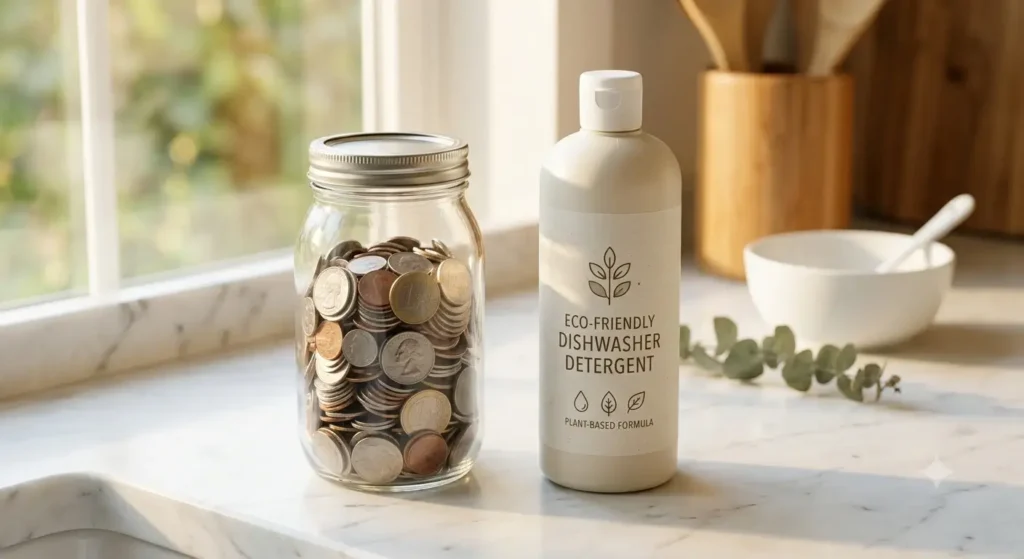
Many people assume that eco friendly dishwasher detergent and organic dishwasher detergent cost significantly more than conventional brands. In reality, the cost difference is smaller than most people think — and when you factor in the full picture, non toxic options often deliver better value.
Cost Per Load — Non Toxic vs Conventional
| Product Type | Cost Per Load |
|---|---|
| Conventional pods (Cascade, Finish) | $0.25 — $0.45 |
| Non toxic pods (Seventh Generation) | $0.28 — $0.50 |
| Plastic free tablets (Blueland) | $0.30 — $0.45 |
| Eco pods (Dropps) | $0.25 — $0.40 |
| Homemade liquid detergent | $0.03 — $0.08 |
The cost difference between conventional and non toxic options is typically $0.03 — $0.10 per load — less than most people expect. For a household running one load daily, this translates to approximately $10 — $35 more per year for a fully non toxic option.
The Real Cost Calculation
When comparing non toxic to conventional dishwasher detergent, consider the full picture:
Healthcare costs: Reducing daily chemical exposure reduces the risk of chemical-related health issues over time. Allergic reactions, skin sensitivities, and respiratory irritations from conventional detergent chemicals all have associated healthcare costs.
Appliance longevity: Non toxic detergents without harsh bleach and aggressive synthetic chemicals are gentler on dishwasher components — seals, spray arms, and the interior finish — potentially extending the life of your appliance.
Concentrated formulas: Many non toxic brands — particularly tablet and powder formats — offer highly concentrated formulas that use less product per load than conventional alternatives. Blueland tablets, for example, are engineered for one tablet per full load regardless of load size.
Bulk purchasing: Brands like Seventh Generation, Dropps, and Ecover all offer bulk packaging that significantly reduces the per-load cost. Buying a 6-pack or a 90-count bag brings the cost per load to parity with or below conventional brand pricing.
Eco Friendly Dishwasher Detergent and Consumption
A major advantage of many eco friendly dishwasher detergent products is their concentration. Conventional detergents often contain significant amounts of water and filler ingredients that add weight and volume — but no cleaning benefit.
Concentrated non toxic detergents use:
- Less water in the formula
- More active cleaning ingredients per gram
- Smaller packaging for the same number of loads
- Less product per load for equivalent results
This concentration means less packaging waste, lower shipping costs per load, and a smaller carbon footprint per wash.
Reason 5: Supporting Sustainable Brands That Are Changing the Industry
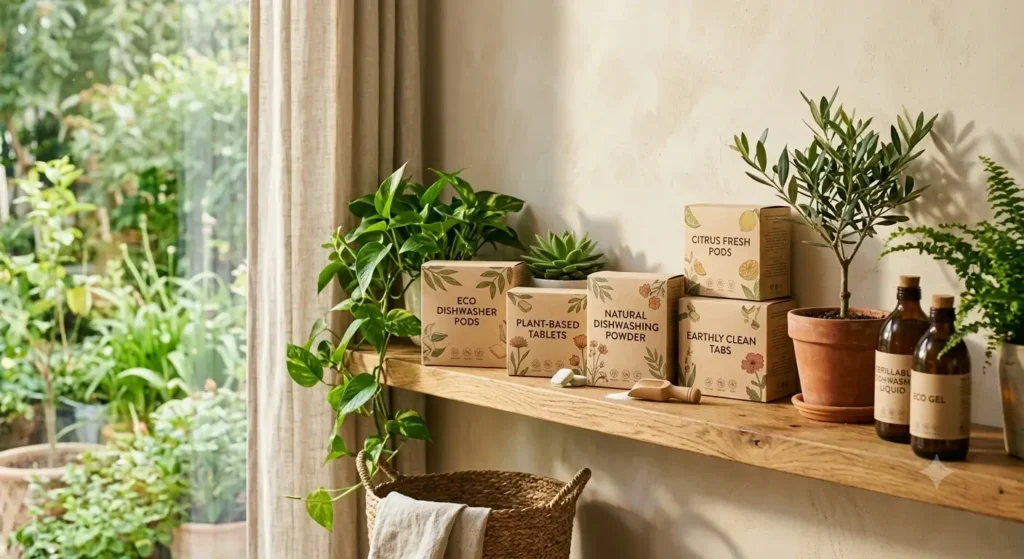
Every purchase is a vote for the kind of products you want to see on store shelves. Choosing non toxic dishwasher detergent from sustainable brands directly supports companies that are investing in safer ingredients, better packaging, and more responsible manufacturing.
Overview of Brands Offering Non Toxic Dishwasher Detergent
Seventh Generation Founded in 1988, Seventh Generation is the original mainstream natural cleaning brand in America. Their dishwasher products carry USDA Certified Biobased status and EPA Safer Choice certification. They publish a full ingredient disclosure — including fragrance components — on every product.
Dropps Dropps has pioneered plastic-free dishwasher pods in the US market. Their subscription model reduces packaging waste further and their formula is certified by EPA Safer Choice. They are committed to publishing full ingredient transparency.
Blueland Blueland’s reusable container model eliminates single-use plastic packaging entirely. Their dishwasher tablets are Leaping Bunny certified cruelty-free, EWG Verified, and formulated without any of the chemicals on the Environmental Working Group’s concern list.
Grove Collaborative Grove Co. offers B-Corp certified cleaning products across their entire range. Their dishwasher tablets are plastic-free, plant-based, and concentrated. Grove publishes complete ingredient transparency and third-party certification for all cleaning products.
Ecover Ecover is a European brand with decades of experience in plant-based cleaning. Their dishwasher tablets are biodegradable, phosphate-free, and packaged in recycled materials. They operate their manufacturing facility on renewable energy.
How to Identify Truly Healthy Dishwasher Detergents — Not Greenwashing
The term “natural” on a dishwasher detergent label means nothing legally. Any company can use it without meeting any specific standard. Here is how to identify genuinely healthy dishwasher detergent versus greenwashed products:
Look for these certifications:
| Certification | What It Means |
|---|---|
| EPA Safer Choice | All ingredients reviewed and approved by EPA for human and environmental safety |
| USDA Certified Biobased | Verified percentage of plant-derived ingredients |
| EWG Verified | Meets Environmental Working Group’s strict health and transparency standards |
| Leaping Bunny | Certified cruelty-free — no animal testing |
| B-Corp Certified | Meets high standards for social and environmental performance |
| Cradle to Cradle | Product designed for complete sustainability from manufacturing to disposal |
Avoid products that:
- List “fragrance” without disclosing fragrance components
- Use “natural” without third-party certification
- Contain chlorine bleach or sodium hypochlorite
- Include methylisothiazolinone (MIT) or benzisothiazolinone
- Do not publish a complete ingredient list
Check the EWG Cleaning Product Database: The Environmental Working Group (EWG) rates thousands of cleaning products including dishwasher detergents on a scale of A through F based on ingredient safety. Products rated A or B are the safest choices. Search any product at EWG’s Guide to Healthy Cleaning before purchasing.
Homemade Non Toxic Dishwasher Detergent — The Ultimate Control
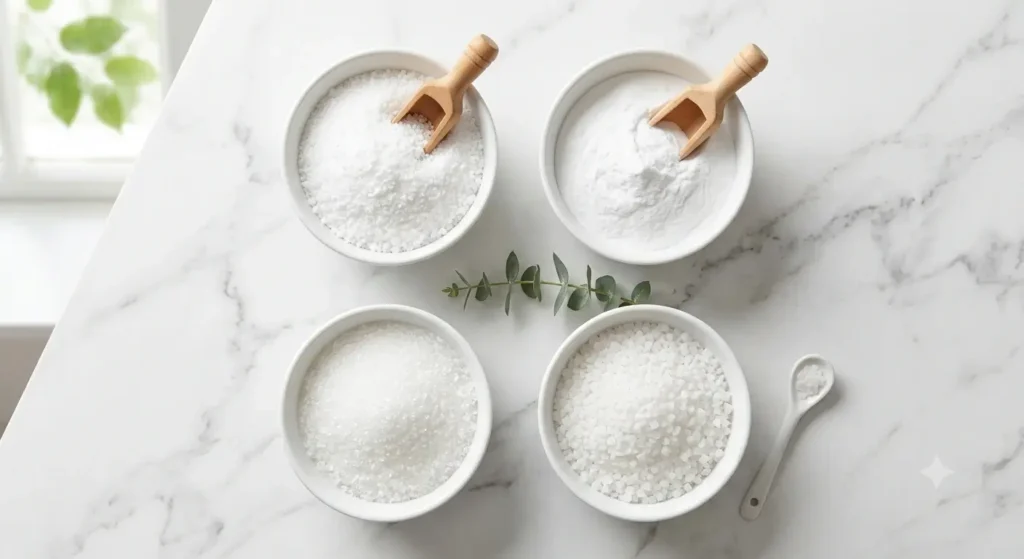
If you want complete control over every ingredient that touches your dishes, making your own homemade non toxic dishwasher detergent at home is simpler than most people expect.
Basic Non Toxic Dishwasher Powder Recipe
Ingredients:
- 1 cup washing soda (sodium carbonate)
- 1 cup baking soda (sodium bicarbonate)
- ½ cup citric acid “* ½ cup coarse kosher salt
Instructions:
- Combine all dry ingredients in a large bowl
- Mix thoroughly until uniform
- Store in an airtight glass jar away from moisture
- Use 1-2 tablespoons per load
Cost per load: Approximately $0.04 — $0.07
Every ingredient is:
- Food-grade safe
- Biodegradable
- Free from synthetic chemicals
- Inexpensive and widely available
For complete homemade dishwasher detergent recipes including liquid, pod, and citrus-scented versions, visit our dedicated homemade dishwasher detergent guide.
Non Toxic vs Conventional Dishwasher Detergent — Complete Honest Comparison
| Feature | Non Toxic | Conventional |
|---|---|---|
| Harmful chemicals | ✅ None | ❌ Phosphates, chlorine, synthetic fragrance |
| Chemical residue on dishes | ✅ None | ⚠️ Possible |
| Indoor air quality impact | ✅ Minimal | ⚠️ Chlorine vapors, VOCs |
| Environmental impact | ✅ Biodegradable | ❌ Phosphates, slow-degrading surfactants |
| Plastic packaging | ✅ Often plastic-free | ❌ Plastic pods, plastic bottles |
| Cleaning performance | ✅ Very good to excellent | ✅ Excellent |
| Hard water performance | ✅ With citric acid | ✅ Good |
| Cost per load | $0.25 — $0.50 | $0.25 — $0.45 |
| Safe for babies/children | ✅ Yes | ⚠️ Chemical exposure risk |
| Safe for sensitive skin | ✅ Yes | ⚠️ Fragrance and dye concerns |
| Certifications available | ✅ EPA, EWG, USDA | ⚠️ Limited |
Frequently Asked Questions
What is the best non toxic dishwasher detergent in 2026?
Seventh Generation Dishwasher Packs are the best non toxic dishwasher detergent for most households in 2026. They deliver excellent cleaning performance with a USDA Certified Biobased, plant-derived formula — free from phosphates, chlorine, synthetic fragrance, and artificial dyes. For plastic-free packaging, Blueland Dishwasher Tablets are the best choice. For mainstream availability, Cascade Free & Clear ActionPacs offer a biobased formula at most US retailers.
Are non toxic dishwasher detergents as effective as conventional brands?
Yes — the best non toxic dishwasher detergents clean just as effectively as conventional brands on everyday household dishes. Plant-based enzymes (protease, amylase, lipase) break down protein, starch, and fat stains just as effectively as synthetic enzyme formulas. The performance gap has narrowed significantly in 2026. For very heavy baked-on food, using a hot cycle and allowing dishes to soak briefly before loading improves results with any detergent.
What harmful chemicals should I avoid in dishwasher detergent?
The most important chemicals to avoid are phosphates, chlorine bleach (sodium hypochlorite), synthetic fragrance (which may contain phthalates), methylisothiazolinone (MIT), benzisothiazolinone (BIT), and artificial dyes. These ingredients either leave residues on dishes, release harmful vapors during the wash cycle, or cause environmental damage when they enter the wastewater system.
What are plastic free dishwasher tablets?
Plastic free dishwasher tablets are dishwasher cleaning products sold without individual plastic wrapping or plastic outer packaging. Conventional dishwasher pods are wrapped in polyvinyl alcohol (PVA) plastic film. Plastic-free alternatives — like Blueland tablets — are unwrapped solid tablets sold in cardboard boxes or reusable metal tins. They eliminate both the PVA film concern and the plastic packaging from the waste stream.
Are non toxic dishwasher pods safe for septic systems?
Yes — non toxic dishwasher pods formulated with plant-based, biodegradable ingredients are safe for septic systems. Brands like Seventh Generation, Dropps, and Ecover all explicitly state septic system compatibility. Their plant-derived surfactants biodegrade rapidly without harming the beneficial bacterial colonies that septic systems depend on. Conventional pods with synthetic surfactants and bleach can disrupt septic system bacteria.
How do I switch from conventional to non toxic dishwasher detergent without losing cleaning performance?
Start by cleaning your dishwasher thoroughly before switching — residue from conventional detergent can interfere with non toxic formulas. Run a white vinegar cycle to clean the interior, clean the filter, and clear the spray arms. Fill the rinse aid dispenser with white vinegar. Use the hottest available cycle for the first few loads. Scrape but do not pre-rinse dishes. Most households notice no performance difference after this transition.
Is organic dishwasher detergent worth the higher price?
Organic dishwasher detergent is worth the price for households prioritizing ingredient safety, particularly for families with babies, young children, or people with chemical sensitivities. The cost premium over conventional brands is typically $10-35 per year for daily use — less than most people expect. When factoring in reduced exposure to potentially harmful chemicals and environmental benefits, most families find the switch worthwhile.
What certifications should I look for on non toxic dishwasher detergent?
The most trusted certifications are EPA Safer Choice, EWG Verified, and USDA Certified Biobased. EPA Safer Choice means all ingredients have been reviewed and approved for human and environmental safety. EWG Verified means the product meets the Environmental Working Group’s strict health and transparency standards. USDA Certified Biobased confirms a verified percentage of plant-derived ingredients. Products carrying two or more of these certifications offer the highest confidence in their safety claims.
Can I make my own non toxic dishwasher detergent at home?
Yes — homemade non toxic dishwasher detergent made from washing soda, baking soda, citric acid, and coarse salt costs as little as $0.04 per load and contains zero synthetic chemicals. It works well for everyday lightly soiled dishes. For heavily soiled loads or hard water areas, a quality commercial non toxic brand may outperform the homemade version. Full recipes are in our homemade dishwasher detergent guide.
What is environmentally friendly dishwasher detergent?
Environmentally friendly dishwasher detergent uses plant-based, biodegradable ingredients that break down safely in wastewater without harming aquatic ecosystems. It contains no phosphates (which cause algae blooms), no chlorine (which forms toxic compounds in waterways), and no slow-degrading synthetic surfactants. It is also typically packaged in recyclable or compostable materials to reduce plastic waste.
Conclusion
Switching to non toxic dishwasher detergent is one of the most impactful and easiest changes you can make for your family’s health and for the environment. The five reasons are clear:
- ✅ Health Benefits — eliminates chemical residues on dishes, chlorine vapors in kitchen air, and hormone-disrupting synthetic fragrances
- ✅ Environmental Benefits — biodegradable ingredients, plastic-free packaging options, no phosphate pollution
- ✅ Genuine Effectiveness — the best non toxic options match conventional brands on everyday dishes
- ✅ Cost Savings — concentrated formulas, bulk options, and negligible price premium
- ✅ Supporting Better Brands — vote with your purchase for transparency, sustainability, and accountability
Your non toxic dishwasher detergent quick-start checklist:
- ✅ Choose EPA Safer Choice or EWG Verified certified product
- ✅ Start with Seventh Generation, Dropps, or Blueland
- ✅ Fill rinse aid dispenser with white vinegar
- ✅ Clean your dishwasher before switching — read our how to clean your dishwasher guide
- ✅ Use the hottest available cycle
- ✅ Scrape dishes — do not pre-rinse
- ✅ For hard water — add citric acid to boost performance
The switch is simple. The benefits are real. And your family will eat from genuinely cleaner, chemical-free dishes starting from your very next load.
For more natural home cleaning guides, explore our articles on homemade dishwasher detergent, how to clean your dishwasher, how to prevent mold in home naturally, and budget-friendly home tweakz.
👤 About the Author
Home Tweakz Team Home Improvement & Natural Cleaning Experts
The Home Tweakz Team is a dedicated group of home improvement, natural cleaning, and interior design specialists helping American homeowners create cleaner, safer, and more sustainable living spaces. With extensive hands-on experience researching cleaning product ingredients, testing natural alternatives, and evaluating brand certifications, our team delivers practical, thoroughly researched advice you can trust immediately.
🌐 Website: hometweakz.com
Q&A
Question: How can I quickly spot greenwashing on dishwasher detergent labels?
Short answer: Use a simple checklist: look for trusted third‑party certifications and avoid vague or undisclosed ingredients.
- Look for: EPA Safer Choice, EWG Verified, USDA Certified Biobased (two or more is ideal).
- Avoid: “fragrance” with no disclosure, chlorine bleach/sodium hypochlorite, methylisothiazolinone (MIT), benzisothiazolinone (BIT), and artificial dyes.
- Verify: Search the product in the EWG Guide to Healthy Cleaning for an A or B rating.
- Red flag: The word “natural” without any certification or full ingredient list.
Question: Are PVA-wrapped pods considered plastic free?
Short answer: No. “Plastic free” means no plastic film (including PVA) and minimal or compostable packaging. Choose unwrapped or paper‑wrapped tablets.
- Conventional pods use polyvinyl alcohol (PVA) film; research questions whether PVA fully breaks down in wastewater.
- Plastic‑free picks in this guide: Blueland Dishwasher Tablets (completely unwrapped in a reusable tin), Dropps Dishwasher Pods (PVA‑free formula in cardboard), Eco‑Me (paper‑wrapped), Grove Co. (plastic‑free packaging).
Question: I switched to a non toxic detergent and now see spots/film. What should I do?
Short answer: Tweak a few settings and maintenance steps—non toxic formulas shine with the right setup.
- Fill the rinse‑aid dispenser with white vinegar.
- Run the hottest cycle available (enzymes work best above 120°F).
- Add 1 teaspoon of citric acid to the detergent compartment if you have hard water.
- Scrape, don’t pre‑rinse—enzymes need some soil to “grab.”
- Clean the dishwasher (filter, spray arms, interior) to remove old residue, then re-test.
Question: Do I still need a rinse aid with non toxic detergents—and is vinegar safe to use?
Short answer: Yes, a rinse aid helps drying and prevents spots; the guide specifically recommends white vinegar.
- Fill your dishwasher’s rinse‑aid compartment with white vinegar for a simple, non toxic alternative.
- This pairs well with plant‑based detergents to reduce spotting and improve drying without synthetic additives.
Question: What’s the most cost‑effective way to go non toxic without sacrificing results?
Short answer: Buy concentrated options in bulk—or use the basic homemade powder for the lowest per‑load cost.
- Bulk buys: Seventh Generation, Dropps, and Ecover offer bulk packaging that brings costs to parity with conventional brands.
- Concentrated tablets (e.g., Blueland) use less product per load and reduce packaging waste.
- Homemade powder (washing soda, baking soda, citric acid, coarse salt) costs about $0.04–$0.07 per load and works well for everyday dishes.
- Overall premium vs. conventional: typically $10–$35 per year for a once‑daily dishwasher user.
Question: Will non toxic detergents work in hard water without leaving a film?
Short answer: Yes—pair the detergent with a few simple tweaks for hard water and you’ll get spot-free results.
- Add 1 teaspoon of citric acid to the detergent compartment with your pod/tablet (hard water booster noted in the guide).
- Fill the rinse-aid dispenser with white vinegar to reduce spotting and improve drying.
- Run the hottest cycle available (enzymes perform best above 120°F).
- Keep the machine clean (filter, spray arms, interior) so plant-based formulas can work at full strength.
Question: Are essential oil–scented detergents safe if I’m fragrance-sensitive, or should I go fragrance-free?
Short answer: Essential oils avoid phthalates and undisclosed synthetic fragrance chemicals, but highly sensitive households may prefer fragrance-free.
- The guide endorses essential oils (lemon, lavender, eucalyptus) as a safer scent option than synthetic fragrance.
- For babies, allergy-prone, or scent-sensitive family members, choose a fragrance-free version offered by brands like Seventh Generation and others.
Question: Will switching to non toxic detergent really help my dishwasher last longer?
Short answer: Potentially, yes—formulas without bleach and harsh synthetics are gentler on components over time.
- The guide notes non toxic detergents can be easier on seals, spray arms, and interior finishes.
- Gentler ingredients plus regular maintenance (vinegar rinse aid, periodic cleaning) can support appliance longevity.
Question: What’s the difference between “plant-based” and “USDA Certified Biobased” on the label?
Short answer: “Plant-based” describes ingredient origin; “USDA Certified Biobased” verifies the percentage of biobased content through a third party.
- Plant-based: uses ingredients like coconut/corn/sugar-derived surfactants, mineral builders, and natural enzymes.
- USDA Certified Biobased: a formal certification confirming a measured share of plant-derived content.
- For highest confidence, pair biobased claims with additional certifications (EPA Safer Choice, EWG Verified).
Question: Can I make pods/tablets at home, or is the basic powder my best DIY option?
Short answer: You can make multiple DIY formats—powder is the simplest, but tablet/pod and liquid recipes are available in the guide.
- The basic powder (washing soda, baking soda, citric acid, coarse salt) costs about $0.04–$0.07 per load and works well for everyday soil.
- For very hard water or heavy, baked-on messes, a quality commercial non toxic tablet/pod may outperform DIY.