
By Home Tweakz Team | Last Updated: 2026
Introduction
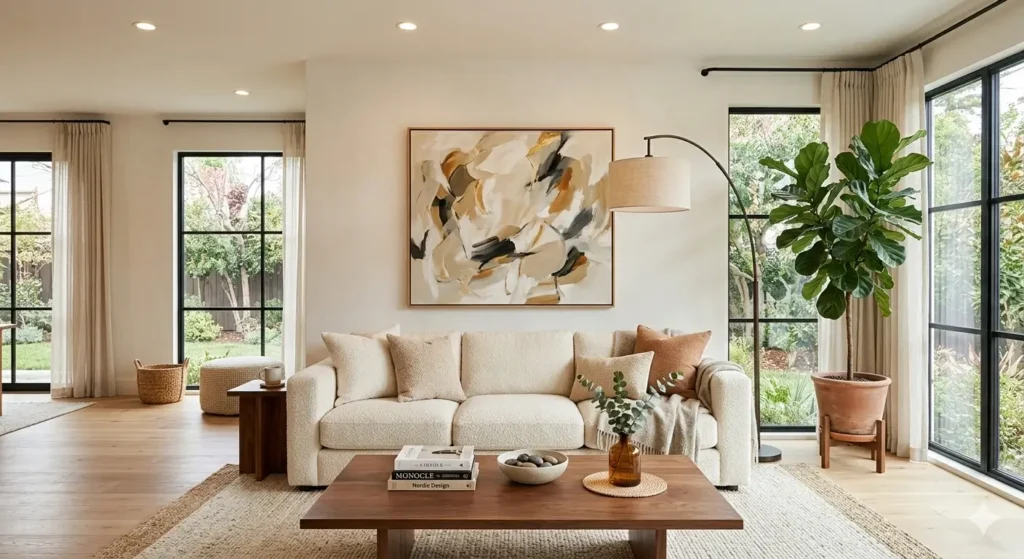
Your living room is the heart of your home. It’s where you unwind after a long day, entertain guests, and create memories with family. Yet for many homeowners, getting the living room design just right can feel overwhelming.
Too much furniture and the space feels cramped. Too little and it feels cold. The wrong colors, lighting, or layout can completely change the mood of a room — and not always in a good way.
The good news? You don’t need to hire a professional designer or spend a fortune to get results you’ll love. What you do need is a clear plan and the right guidance.
In this guide, we’re breaking down 10 essential tips for modern living room design that work for rooms of every size and style. Whether you’re starting from scratch or refreshing an existing space, these practical strategies will help you create a room that’s both beautiful and livable.
National Association of Home Builders (NAHB) — Design Trends in New Homes — Referenced for context on current homeowner preferences and living room design trends
1. Define Your Modern Aesthetic
Before moving a single piece of furniture or picking up a paint brush, you need to decide what “modern” means to you. This is the step most homeowners skip — and it’s usually why rooms end up feeling disconnected or incomplete.
Modern living room design isn’t one thing. It’s a broad category that includes everything from clean-line Scandinavian minimalism to the earthy textures of warm minimalism to the sleek polish of contemporary urban spaces.
Ask yourself a few key questions:
- Do you prefer cool, neutral tones or warm, natural hues?
- Is your lifestyle more casual or formal?
- Do you entertain often, or is the room mainly for family use?
- What feeling do you want when you walk in — calm and quiet, or bold and energized?
Your answers will guide every decision you make from here on, from furniture selection to wall color to the type of art you hang.
If you’re still figuring out your style, exploring modern home decor ideas for every home is a great starting point. You’ll find real examples that help you identify what resonates with your taste.
2. Choose a Functional Layout
A beautiful room that’s difficult to move around in will never feel right. Layout is the foundation of any successful living room design, and it’s something you need to think through carefully before buying anything.
A. Consider Traffic Flow
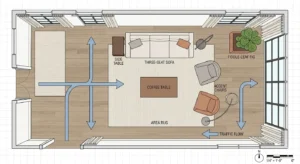
Traffic flow refers to how people move through and around your living room. Good traffic flow means walking from one end of the room to another feels natural — there are no obstacles, no awkward squeezes between furniture, and clear pathways to every exit and entry point.
A common rule of thumb is to leave at least 36 inches of clearance for main walkways and 18 inches between pieces of furniture like coffee tables and sofas. If your living room also connects to a dining area or kitchen, this becomes even more important.
Avoid pushing all your furniture against the walls. It’s a tempting move, especially in smaller rooms, but it almost always makes a space feel less inviting and actually harder to use.
B. Optimize Seating Arrangements
The arrangement of your seating sets the tone for how the room functions socially. In most living rooms, the sofa is the anchor piece — everything else is arranged around it.
For conversation-friendly rooms, position seating so that people can make natural eye contact without craning their necks. A sofa facing two chairs with a coffee table in between is one of the most timeless and functional arrangements you’ll find.
In smaller spaces, an L-shaped sectional can do double duty — providing ample seating without requiring multiple pieces. Just make sure it doesn’t dominate the room so much that it blocks light or pathways.
For more help designing within a smaller footprint, check out our detailed guide on small space interior design tips.
3. Incorporate Statement Furniture
Modern living room design doesn’t mean filling a room with expensive pieces. It means choosing the right pieces — and letting them do the heavy lifting visually.
A statement furniture piece is one that draws the eye and anchors the room. This could be:
- A deep, oversized velvet sofa in a rich jewel tone
- A sculptural armchair with an unusual silhouette
- A sleek media console in walnut or matte black
- A bold, geometric coffee table in marble or brass
The key word here is one. One statement piece, styled well, will always outperform a room full of competing focal points.
When choosing statement furniture, think about proportion. A piece that’s too small for the room will look lost. One that’s too large will dominate. Use painter’s tape on the floor to map out the dimensions of any major piece before you buy it — it’s a simple trick that saves a lot of regret.
Pro tip: If your budget is tight, a single reupholstered vintage sofa in a bold fabric can be just as impactful as anything brand new.
choosing the right furniture is essential, especially in compact spaces. Explore our Small Living Room Furniture guide for smart space-saving ideas.
For more living room inspiration, explore these helpful guides:
4. Color Palette: Less Is More
Color is one of the most powerful tools in living room interior design — and one of the easiest to overdo.
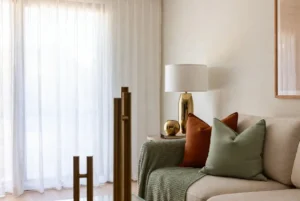
A modern color palette is typically built on restraint. That doesn’t mean everything has to be white or gray. It means choosing a cohesive set of 2 to 3 colors and sticking to them throughout the room.
A good formula to follow:
| Role | Percentage of Room | Example |
|---|---|---|
| Dominant (base) | ~60% | Soft white, warm greige, deep navy |
| Secondary (support) | ~30% | Warm wood, textured linen, sage green |
| Accent (pop) | ~10% | Terracotta, brass, deep rust |
Your dominant color will likely be your walls and larger furniture. Secondary colors show up in rugs, curtains, and upholstery. Accents appear in pillows, artwork, and decorative objects.
Keep in mind that modern design often uses color temperature strategically. Cool tones (white, gray, blue) make rooms feel larger and more open. Warm tones (cream, tan, amber) make them feel cozier and more intimate.
For a deeper look at how warm tones work in contemporary spaces, the warm minimalism living room ideas guide breaks it down beautifully.
5. Wall Art for Living Rooms: Make a Statement
Wall art for living rooms is often an afterthought — something homeowners add at the very end to fill empty space. But when it’s done intentionally, wall art can completely transform the character of a room.
In modern design, large-scale art tends to work better than small pieces hung in clusters (though gallery walls can absolutely work when done with care). A single oversized canvas or framed print above a sofa creates a sense of intention and visual weight that pulls the entire room together.
When choosing art for a living room, consider:
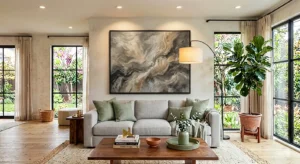
- Scale: Art should typically be two-thirds the width of the furniture below it
- Color connection: Pull at least one color from the art into your room’s palette
- Height: The center of the artwork should sit roughly at eye level — about 57 to 60 inches from the floor
Abstract art, botanical prints, architectural photography, and line drawings all work well in modern living rooms. The goal is something that feels personal without being cluttered.
If you’re looking for creative ideas beyond framed prints, the wall art ideas for boring walls guide covers everything from DIY options to renter-friendly solutions.
6. Lighting: Layering for Ambiance
Lighting is perhaps the single most underestimated element of living room design. Most homeowners rely on one overhead light source — and then wonder why their room never feels quite right.
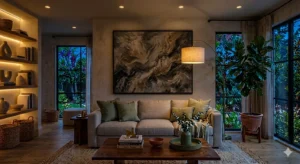
The secret is layering. A well-lit living room uses three distinct types of lighting that work together to create depth, functionality, and atmosphere. Getting this right is one of the most impactful — and most overlooked — living room lighting ideas you can act on immediately.U.S. Department of Energy — Energy-Efficient Lighting — Referenced for guidance on lighting color temperature and energy-efficient bulb choices
| Lighting Type | Purpose | Common Fixtures |
|---|---|---|
| Ambient | General room illumination | Ceiling fixtures, recessed lights, chandeliers |
| Task | Focused light for activities | Living room lamps, floor lamps, table lamps |
| Accent | Highlight features and add depth | Wall sconces, LED strips, track lighting, picture lights |
A. Ambient Lighting
Ambient lighting is your room’s base layer — the general illumination that fills the space. This is typically your overhead fixture: a ceiling light, recessed lights, or a chandelier. These are your primary modern light fixtures and they set the overall tone.
For modern living rooms, warm white bulbs (2700K to 3000K color temperature) almost always feel better than cool or daylight bulbs. They create a welcoming glow that flatters both the space and the people in it.
If you have a low ceiling, living room lighting ideas for low ceilings include flush-mount fixtures, recessed downlights, and slim-profile LED panels — all of which provide excellent ambient coverage without eating into headroom. Avoid pendants and chandeliers with long drops in rooms under 8 feet.
B. Task Lighting
Task lighting is targeted light for specific activities — reading, working, or doing anything that requires focused visibility. Living room lamps — whether floor lamps beside seating or table lamps on side tables — are the most common task lighting solution.
When choosing living room lamps, consider both function and form. A well-proportioned lamp with a unique lamp design can serve double duty as a decorative element and a practical light source. Arched floor lamps in matte black or brushed brass are particularly popular in modern living rooms right now because they extend over seating areas without requiring a side table.
Table lamps work best in pairs — flanking a sofa or placed symmetrically on a console — because asymmetry in lamp placement tends to make a room feel slightly off-balance.
C. Accent Lighting
Accent lighting is used to highlight specific features of your room — a piece of wall art, a built-in bookcase, an architectural detail, or a fireplace surround.
Wall lighting ideas for living rooms include picture lights mounted directly above artwork, wall sconces flanking a fireplace or media wall, and LED strip lights tucked behind open shelving. Living room wall lighting ideas like sconces are particularly useful because they add light at eye level — a height that feels warm and human in a way that overhead-only lighting simply doesn’t.
LED lighting ideas for living rooms have expanded dramatically in recent years. Recessed LED strips behind crown molding create a soft indirect glow. Color-tunable LED fixtures let you shift from cool white for daytime clarity to warm amber for evening ambiance. Track lighting ideas for living rooms typically involve adjustable heads on a ceiling-mounted rail — excellent for spotlighting art, shelving, or an accent wall without requiring permanent fixture changes.
For a cozy, intimate feel in the evening, cozy lighting tips that actually work include: dimming all overhead lights to about 30%, turning on one or two living room lamps at medium brightness, and using a single accent light or candles to create a warm focal glow. The difference in atmosphere between a room at full overhead brightness versus layered, dimmed sources is dramatic.
Done well, accent and wall lighting add dimension to a room and make it feel more curated. It’s the difference between a room that looks flat in photographs and one that looks professionally designed.
7. Integrate Natural Elements
One of the defining characteristics of modern living room design in recent years has been the move toward bringing the outside in. Natural elements add warmth, texture, and a sense of life to spaces that might otherwise feel sterile.
A. Indoor Plants
Plants do a lot of work in a living room. They add color, soften hard lines, improve the sense of air quality, and instantly make a space feel more alive and habitable.
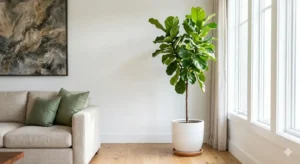
For living rooms, larger plants tend to make the most impact. A tall fiddle-leaf fig or bird of paradise in the corner of a room creates a vertical element that draws the eye upward and adds drama without requiring additional furniture.
If you’re new to indoor plants or don’t have much natural light, there are plenty of low-maintenance options that thrive in typical living room conditions. The best low-maintenance houseplants for beginners guide is a great place to start.
For rooms with limited natural light, the low-light indoor plants for beginners guide covers the best varieties that can handle shadier conditions.
B. Natural Materials
Beyond plants, incorporating natural materials throughout your living room adds tactile richness and warmth. Think:
- Wood: Coffee tables, media consoles, and floating shelves in walnut, oak, or reclaimed timber
- Stone: Marble tabletops, slate tile surrounds, or limestone accents
- Rattan and cane: Light, airy textures that work especially well in transitional and bohemian-modern styles
- Linen and cotton: Upholstery and throw textiles that add softness without weight
The goal isn’t to make your living room look like a forest — it’s to introduce enough organic texture that the space feels grounded and human.
8. Design with Texture
Texture is what makes a room feel layered and interesting rather than flat and catalog-like. In a living room built on a restrained color palette, texture becomes the primary way you add visual and tactile depth.
Here’s how to layer texture effectively:
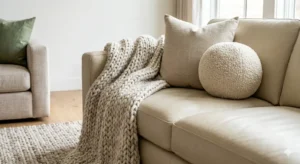
- Soft textures: Boucle or velvet upholstery, chunky knit throws, a plush area rug
- Hard textures: Exposed brick, stone feature walls, raw-edge wood furniture
- Woven textures: Rattan pendants, seagrass baskets, macramé wall hangings
- Shiny textures: Brass hardware, mirrored surfaces, polished ceramics
The rule of thumb: mix at least three different textures in any given seating arrangement. A smooth leather sofa paired with a linen throw pillow and a wool rug, for instance, creates a conversation between materials that makes the space feel considered.
Don’t forget your floors. An area rug anchors your seating arrangement, defines the space visually, and adds a layer of warmth — both literal and aesthetic. In a modern living room, a large rug (big enough that at least the front legs of all seating pieces sit on it) will always outperform a small one that floats in the center of the room.
9. Fireplace as a Focal Point
A fireplace is one of the most powerful design assets a living room can have — and one of the most commonly misused.
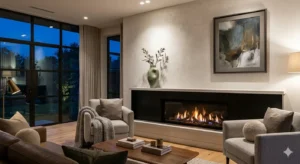
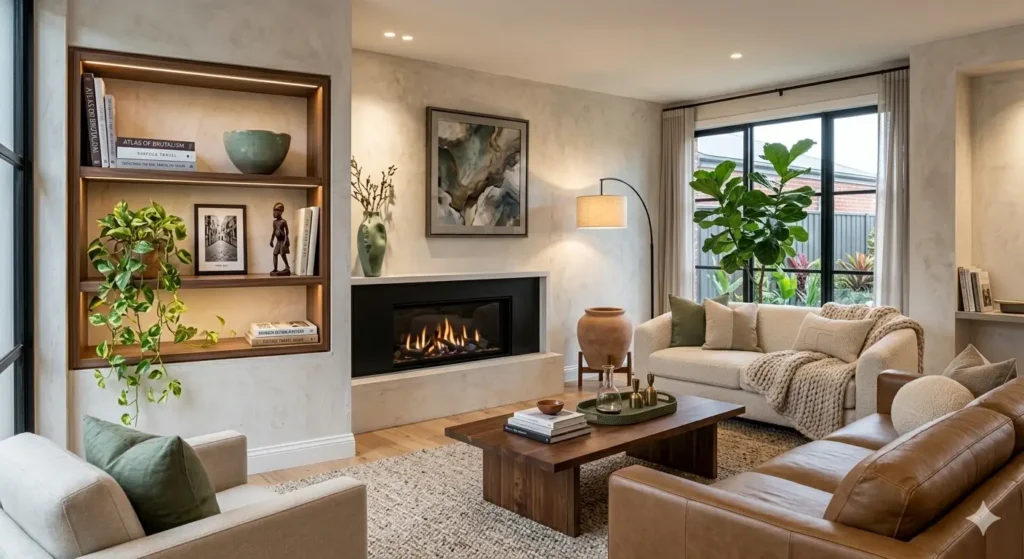
In modern living room design, the fireplace works best as the room’s primary focal point. That means arranging your furniture to face it, keeping the mantel intentionally styled (not cluttered), and treating the surround material as a design statement in its own right.
Fireplace surround options by style:
| Style | Surround Material | Mantel Treatment |
|---|---|---|
| Contemporary modern | Plaster, limewash, concrete | Minimal: one object or nothing |
| Warm minimalism | White oak, shiplap, stone | Styled with organic objects |
| Transitional | Marble tile, painted wood | Gallery of frames, candles, art |
| Industrial modern | Raw steel, exposed brick | Reclaimed wood shelf, sparse decor |
If your fireplace is gas or electric, modern linear inserts in matte black or brushed nickel offer a clean, sleek look that works beautifully with contemporary interiors. If it’s wood-burning, the firebox itself becomes part of the design — keep the interior clean and consider painting it with high-heat matte black paint for a more intentional look.
Even if you don’t have a fireplace, you can create a similar focal point effect with a large mirror, an oversized piece of art, or a built-in media wall with intentional styling.
For a broader look at how to approach your living room as a whole, the living room design guide on HomeTweakz covers the fundamentals in depth.
10. Personalize with Decor
This is where the real personality of your living room comes through. Modern design doesn’t mean cold or impersonal — it means thoughtful. And the most thoughtful rooms are the ones that feel lived in and genuinely yours.
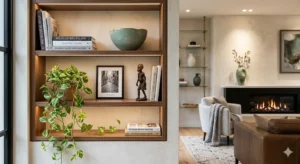
A. Family Photos
Family photos have a reputation for making a room look dated, but that’s really about how they’re displayed, not whether they’re there at all. Modern approaches include:
- Black and white prints in matching matte black frames, arranged in a grid
- One oversized framed photo treated like artwork on the wall
- Mixing family photos with art prints in a cohesive gallery arrangement
The key is consistency in framing and intentionality in arrangement.
B. Art Pieces
If you’ve collected art over the years — prints from travels, originals from local artists, pieces passed down from family — use them. Curated, personal art collections feel far more interesting than anything purchased as a matching set.
C. Travel Souvenirs
Objects picked up during travels are natural conversation starters and give a room genuine character. The trick is curation: not every souvenir belongs on display. Pick the pieces that are visually interesting on their own — a ceramic bowl from Portugal, a textile from Morocco, a carved wooden figure from Japan — and style them intentionally rather than clustering everything together.
A well-chosen collection of three to five meaningful objects on a shelf or coffee tray will always look more intentional than a shelf full of twenty things competing for attention.
For small living rooms where every design decision has to work harder, the modern living room decor ideas for small apartments guide offers layout and styling strategies tailored to tighter spaces.
Key Takeaways
- Define your modern aesthetic before buying anything — clarity of style is what makes rooms feel cohesive
- Prioritize layout and traffic flow; furniture pushed against the walls almost never looks or functions well
- One statement furniture piece styled well beats a room full of competing focal points
- Use a 60/30/10 color rule to keep your palette cohesive without being boring
- Wall art works best at scale — two-thirds the width of the furniture beneath it
- Layer three types of lighting: ambient, task, and accent
- Natural elements (plants, wood, stone) add warmth and texture that synthetic materials can’t replicate
- Mix at least three textures in every seating zone
- A fireplace is a natural focal point — let your layout support it, not compete with it
- Personalize with intention: curated and meaningful beats cluttered and random every time
Frequently Asked Questions
What is the most important element of living room design? Layout is the most foundational element. A room with perfect furniture and beautiful decor but poor traffic flow and awkward seating will never feel right. Get the layout right first, then layer in everything else.
How do I design a living room for a small space? In a small living room, scale and proportion matter more than anywhere else. Choose furniture sized for the room (not oversized), use light colors to open up the space, incorporate mirrors to reflect light and add depth, and avoid blocking windows. Multi-functional furniture — ottomans with storage, sofas with chaise extensions — can help you get more out of every square foot.
What colors work best in a modern living room? Warm neutrals (cream, greige, warm white) and earthy tones (terracotta, sage, warm brown) are the most popular choices for modern living rooms right now. They’re versatile, timeless, and work with a wide range of accent colors. Avoid bright, saturated colors on large surfaces unless you’re going for a deliberately bold statement.
How do I make a living room with a fireplace feel modern? Focus on the surround material and mantel styling. Concrete, limewash plaster, and simple white oak surrounds all read as very current. Keep the mantel minimal — one or two objects maximum. Consider a linear gas insert if your existing firebox looks dated.
What is the best living room layout for conversation? The most conversation-friendly layout positions seating so that everyone can make natural eye contact without straining. A sofa facing two chairs across a coffee table is the classic version. In larger rooms, two facing sofas with a table between them also works very well. The key is that no seat should be more than about 8 feet from any other — beyond that, comfortable conversation becomes difficult.
How many throw pillows should a sofa have? For a standard three-seat sofa, four to six throw pillows is the sweet spot. Vary the sizes (larger pillows at the back, smaller in front) and mix patterns and textures within your color palette. More than eight pillows on a single sofa usually looks excessive and makes sitting down a production.
What is a half floor design in a living room? A half-floor or split-level living room design refers to a layout where part of the room sits at a slightly higher or lower elevation than the rest — often created with a raised platform or sunken seating area. This architectural feature was popular mid-century and is having a revival in contemporary homes. It naturally defines zones and creates visual drama without requiring walls or partitions.
How do I choose the right size area rug for my living room? The most common mistake is going too small. In a living room, your rug should be large enough that at least the front two legs of all major seating pieces (sofa and chairs) can rest on it. A good starting size for most living rooms is 8×10 feet. In larger rooms, 9×12 or even 10×14 may be appropriate.
Conclusion
A well-designed living room doesn’t happen by accident. It comes from making deliberate decisions — about layout, scale, color, light, texture, and the objects you choose to live with.
The ten tips in this guide aren’t about following trends blindly. They’re about understanding the principles that make spaces feel intentional, comfortable, and uniquely yours. Whether your living room is compact or expansive, you have more design potential than you might think.
Start with your layout. Define your aesthetic. Build from there. Small, thoughtful changes made in the right order will always outperform a room that’s been thrown together with no clear vision.
For more inspiration and practical guidance, explore the related guides below — each one dives deeper into a specific area of living room and interior design.
About the Author
Home Tweakz Team
Home Tweakz Team is a group of home improvement researchers, DIY enthusiasts, and interior design specialists dedicated to helping homeowners make informed decisions. Our content is carefully researched using industry best practices, expert recommendations, and trusted sources to provide practical, accurate, and actionable advice on home improvement, flooring, interior design, gardening, and home maintenance.
Website: HomeTweakz.com