
By Home Tweakz Team | Home Improvement & Appliance Care Experts | Updated 2026
Is your dishwasher leaving cloudy glasses, strange smells, or food residue on your plates? The culprit is not your detergent — your dishwasher itself needs attention. Cleaning your dishwasher regularly is one of the most overlooked yet essential home maintenance tasks you can do.
Over time, grease, food particles, soap scum, and hard water minerals build up inside your machine. This leads to poor cleaning performance, unpleasant odors, and even expensive appliance damage.
The good news? Knowing how to clean a dishwasher properly takes less than an hour and costs almost nothing.
In this complete guide, you will learn:
- How often to clean your dishwasher
- How to clean the filter, spray arms, and door gasket step by step
- How to fix a smelly dishwasher for good
- How to remove limescale from your dishwasher naturally
- How to deep clean your dishwasher every few months for best results
Whether you own a Whirlpool, Bosch, Samsung, or GE — these proven steps work for every brand and model.
Why It Is Important to Clean Your Dishwasher
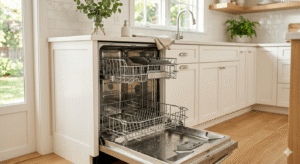
Your dishwasher works hard every single day — but it cannot clean itself. Every wash cycle deposits a small amount of grease, food debris, and mineral residue onto the interior walls, filter, and spray arms. Over weeks and months, this invisible buildup accumulates and causes very real problems.
Your dishes are only as clean as your machine. A dirty dishwasher recirculates grime back onto your plates, glasses, and cutlery. That cloudy film on your glasses or greasy residue on your dishes? That is almost always a sign the machine itself needs a thorough wash.
Neglect shortens appliance life significantly. Limescale from hard water slowly clogs spray arms and puts unnecessary strain on the pump and heating element. Regular cleaning prevents these costly repairs and can extend the life of your dishwasher by several years.
Mold and bacteria love warm, moist environments. The door gasket, filter, and drain are prime breeding grounds. Without routine cleaning, these areas become hygiene hazards that can transfer to the dishes your family eats from every day.
Common Issues Caused by a Dirty Dishwasher
Skipping dishwasher maintenance leads to a cascade of problems, including:
- Dishes coming out dirty, greasy, or spotted after a full wash cycle
- A persistent musty, sour, or sewage-like smell coming from the appliance
- White or brownish limescale deposits coating interior surfaces and components
- Standing water pooling at the bottom after cycles complete
- Increased energy and water usage as the machine strains to compensate
- Visible mold growth around the door seal and filter housing
The fix for all of these? A consistent cleaning routine — and it starts right here.
How Often Should You Clean Your Dishwasher?
Monthly Maintenance Tasks
To keep your dishwasher running at its best, complete these five core tasks every single month:
- Clean the dishwasher filter — the single most critical maintenance step
- Clean the dishwasher spray arms — clear clogged holes to restore full water pressure
- Wipe down the dishwasher door gasket — remove mold, mildew, and trapped food residue
- Run a vinegar cleaning cycle — dissolves grease and breaks down hard water deposits
- Run a baking soda cycle — deodorizes and brightens the entire interior
These five tasks take under an hour combined and deliver a dramatic difference in cleaning performance and appliance longevity. For more ways to keep your kitchen running efficiently on a budget, the type of detergent you use matters too — see our powder dishwasher detergent guide for options.”
Signs Your Dishwasher Needs Immediate Attention
Do not wait for your monthly cleaning schedule if you notice any of these warning signs:
- Bad smells or foul odors — a musty or sewage-like smell signals decomposing food in the filter or drain
- Cloudy or spotted dishes — white spots on glasses point to hard water mineral buildup inside the machine
- Food particles left on dishes — clogged spray arms or a full filter are almost always the cause
- Standing water at the bottom — indicates a blocked filter or clogged drain that needs immediate attention
- Visible grease or film on interior walls — the machine is overdue for a deep clean
If you notice any of the above, move straight to the step-by-step cleaning guide below.
Step-by-Step Guide to Cleaning Your Dishwasher
Step 1: Prepare for Cleaning
Before you start, gather everything you need in one place:
- White distilled vinegar (2 cups)
- Baking soda (1 cup)
- Dish soap
- Old toothbrush or soft scrub brush
- Microfiber cloths or soft rags
- Toothpick or wooden skewer
- Rubber gloves
- Small bowl or measuring cup
Make sure your dishwasher is completely empty before you begin. Remove all dishes, racks, and utensil baskets. While the racks are out, check for rust spots or damaged tines — repair these with a rack repair kit from any hardware store before continuing.
Step 2: Remove and Clean the Dishwasher Filter
This is the single most important step in the entire process. The filter traps the majority of food debris during every wash cycle, and a clogged or dirty filter is the number one reason dishwashers stop cleaning properly.
Most homeowners never clean the filter — and it shows.
Finding and Accessing the Filter
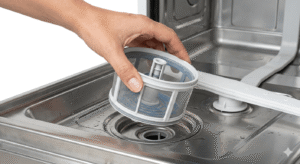
Look at the bottom of your dishwasher, typically near the center or back of the tub. The filter usually appears as a cylindrical or circular component. Most models use a two-part system: an upper cylindrical filter and a lower flat mesh filter beneath it.
To remove it:
- Twist the upper filter counterclockwise and lift it straight out
- Pull out the lower mesh filter beneath it
- On some models, there is only a single flat filter — lift it straight up
Tips for Cleaning the Dishwasher Filter Properly
- Rinse both filter parts under warm running water
- Use a soft toothbrush with a small drop of dish soap to gently scrub away grease and food debris
- Hold the filter up to the light — you should be able to see through the mesh clearly when clean
- Rinse thoroughly until every trace of soap is gone
- Allow both parts to air dry completely before reinstalling
Important: Never use steel wool, abrasive pads, or harsh scrubbers on the filter mesh — they cause permanent damage. Gentle scrubbing with a soft brush is all that is needed.
Cleaning frequency: Once a month for most households. Every two weeks if you cook greasy foods frequently or have a large family.
Step 3: Clean the Dishwasher Spray Arms
The spray arms are the spinning components that shoot pressurized water onto your dishes throughout each cycle. The small holes along the arms can become blocked with mineral deposits and food debris over time, reducing water pressure and causing dishes to come out dirty.
How to Remove the Spray Arms
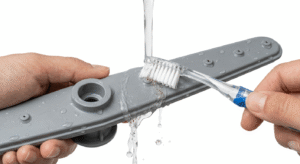
- Lower spray arm: Lift straight up or unscrew the central nut — this varies by model
- Upper spray arm: Unscrew the retaining nut or snap it off from the upper rack
- Always refer to your manufacturer’s manual if unsure — Whirlpool and Bosch both publish detailed step-by-step guides on their official websites
Cleaning Techniques for Optimal Performance
- Shake the removed spray arm gently over the sink — if you hear rattling, debris is trapped inside
- Use a toothpick or wooden skewer to carefully clear each blocked hole
- Rinse under warm water while rotating the arm to flush debris out through the holes
- For heavy mineral buildup, soak the spray arms in white vinegar for 15–20 minutes
- Rinse thoroughly and reinstall securely
After cleaning the spray arms, improved water pressure and noticeably better cleaning results are immediate.
Step 4: Clean the Dishwasher Door Gasket
The rubber gasket that runs around the dishwasher door is one of the most commonly neglected areas in any cleaning routine — and one of the most problematic. The combination of warmth, moisture, and trapped food residue creates the perfect environment for mold and mildew to grow.
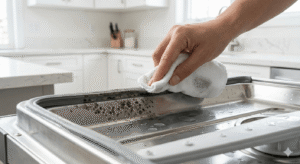
Why the Door Gasket Matters
A dirty, moldy gasket does not just look bad — it actively contaminates your dishes by transferring mold spores during each wash cycle. Over time, a neglected gasket also degrades the rubber seal itself, which can lead to water leaks. Cleaning it monthly protects both your machine and your family’s health.
For more on protecting your home from mold, read our guide on how to prevent mold in home naturally.
Proper Cleaning Methods for the Door Gasket
- Put on rubber gloves before you begin
- Dip a microfiber cloth in warm soapy water
- Wipe along the entire length of the gasket, pressing into every fold and crevice
- Use an old toothbrush to scrub any visible black mold spots thoroughly
- For stubborn mold, dip the toothbrush in undiluted white vinegar and scrub firmly
- Wipe the entire area clean with a fresh damp cloth and dry thoroughly
Do not forget to also wipe the inner edges of the door — the areas that never get rinsed during a wash cycle but collect drips, splatters, and grease over time.
Step 5: Clean the Interior Walls and Bottom
With the filter and spray arms removed, take the opportunity to wipe down the entire interior of the dishwasher.
- Dampen a microfiber cloth with warm water and a few drops of dish soap
- Wipe all interior walls systematically from top to bottom
- Pay extra attention to the corners, the bottom tray, and the area directly around the drain
- Check the drain opening carefully and remove any visible food particles by hand — use gloves for this step
- Wipe the bottom inside surface of the door — this flat area collects a surprising amount of residue that most people miss
Step 6: Run a Vinegar Cleaning Cycle
Now it is time to clean your dishwasher with vinegar — the most effective, affordable, and natural method for dissolving accumulated grease and removing hard water deposits from every surface inside the machine.
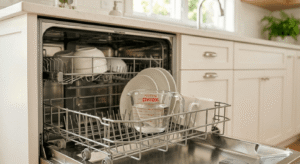
- Place a dishwasher-safe bowl or measuring cup filled with 2 cups of white distilled vinegar on the bottom rack
- Do not add any detergent to this cycle
- Run the dishwasher on the hottest and longest cycle available
- The vinegar naturally disperses throughout the entire machine, cutting through mineral scale, grease, and bacteria on every surface
Key Benefits of Cleaning Your Dishwasher with Vinegar
- Dissolves limescale and hard water deposits without any chemicals
- Cuts through grease buildup on interior walls and components effectively
- Kills bacteria and neutralizes unpleasant odors naturally
- Completely safe for all dishwasher interiors, including stainless steel models
Important: Always use plain white distilled vinegar only. Apple cider vinegar contains pigments that can permanently stain the interior of your dishwasher.
Step 7: Run a Baking Soda Cycle
Immediately after the vinegar cycle completes, follow up with a baking soda treatment. This second cycle deodorizes your dishwasher completely and removes any remaining stains or discoloration from interior surfaces.
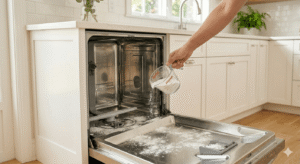
Deodorizing Your Dishwasher with Baking Soda
- Sprinkle 1 cup of baking soda evenly across the entire bottom of the empty dishwasher
- Run a short hot water cycle — this is all that is needed
- Open the door when the cycle finishes — the interior should smell completely fresh and look noticeably brighter and cleaner
The most critical rule of this entire process: Never mix vinegar and baking soda together in the same cycle. These two ingredients neutralize each other instantly on contact, cancelling out the cleaning and deodorizing benefit of both. Always run them as two completely separate cycles, one immediately after the other.
Step 8: Clean the Exterior
The outside of your dishwasher needs regular attention too. Fingerprints, food splatters, and grease build up around the handle, control panel, and front door — especially in busy kitchens.
For stainless steel dishwashers:
- Wipe with a microfiber cloth dampened with warm water and a tiny drop of dish soap
- Always wipe in the direction of the grain — typically horizontal for most models
- Dry the surface immediately after wiping to prevent water spots from forming
- Apply a small amount of baby oil or dedicated stainless steel polish for a lasting shine
For white, black, or colored finishes:
- Use a soft cloth with a mild all-purpose household cleaner
- Wipe the entire front panel, handle, and edges
For the control panel on any model:
- Use a barely damp cloth only — the cloth should not drip
- Never spray any cleaner directly onto the control panel — liquid can seep into the electronics and cause damage
How to Deep Clean Your Dishwasher Every Three Months
Consistent monthly maintenance keeps your dishwasher performing well between deep cleans. But every three months, you should go further with a commercial-grade deep clean session to break down buildup that regular cleaning cannot fully reach.
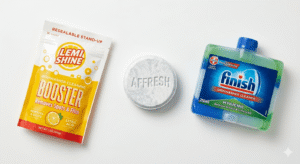
Best Commercial Dishwasher Cleaners for Deep Cleaning
The best dishwasher cleaner products for a thorough quarterly deep clean include:
- Finish Dishwasher Cleaner — highly effective against grease and heavy limescale buildup
- Affresh Dishwasher Cleaner — convenient tablet format, officially recommended by Whirlpool for their machines
- OxiClean Dishwasher Cleaner — excellent for stubborn stains and persistent odor removal
- Lemi Shine Dishwasher Cleaner — specifically formulated to tackle hard water mineral buildup
Best Practices for a Successful Deep Clean
- Always complete all standard monthly steps first — filter, spray arms, gasket, and interior wipe
- Place the commercial cleaner product in the bottom of a completely empty dishwasher
- Follow the specific instructions on the product packaging precisely — most require a hot, full-length cycle
- These specialized products are formulated to break down layers of mineral scale, grease, and old detergent residue that regular monthly cleaning cannot fully address
How to Fix a Smelly Dishwasher
A smelly dishwasher is one of the most common homeowner complaints — and also one of the most straightforward to fix permanently once you know the cause.
Common Causes of Dishwasher Bad Odors
- Decomposed food in the filter or drain — by far the most frequent source of bad smells
- Mold or mildew growing in the door gasket or deep inside the filter housing
- Stagnant water sitting in the drain hose or pooling at the bottom of the machine
- A poorly positioned drain hose that allows wastewater to flow back into the machine between cycles
How to Eliminate Unpleasant Dishwasher Smells
- Deep clean the filter — resolving filter buildup alone eliminates the majority of dishwasher odor problems
- Scrub the door gasket with undiluted white vinegar — kill mold at its source rather than masking the smell
- Treat the drain directly — pour 1 cup of baking soda followed by 1 cup of white vinegar into the drain at the bottom of the machine, allow it to fizz and work for 15 minutes, then run a hot cycle
- Check and correct the drain hose — it must form a high loop under the sink before connecting to the drain to prevent wastewater backflow into the machine
- Run the dishwasher more frequently — machines that sit idle for days accumulate standing water and develop odors much faster
- Leave the door slightly ajar after every cycle — this simple habit allows trapped moisture to escape and prevents mold from taking hold
How to Remove Limescale from Your Dishwasher
If you live in a hard water area, you will eventually notice white or brownish mineral deposits — commonly called limescale — building up on interior walls, the heating element, and spray arm holes. Left untreated, limescale progressively reduces cleaning efficiency and can cause serious damage to appliance components.
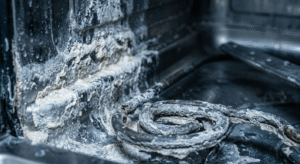
How to Remove Limescale Effectively
The most effective natural method to remove limescale from your dishwasher uses undiluted white vinegar:
- Fill a clean spray bottle with undiluted white vinegar
- Spray all affected interior surfaces generously — walls, door interior, and the bottom tray
- Allow it to sit undisturbed for 15–20 minutes so the acetic acid can fully break down the mineral deposits
- Scrub the treated areas with a soft cloth or non-abrasive brush
- Follow up immediately with a full vinegar cycle as described in Step 6 above
For severe, long-neglected limescale buildup, repeat this complete process two or three times before expecting full results.
Preventing Future Limescale Buildup
- Use rinse aid in every wash cycle — rinse aid causes water to sheet cleanly off surfaces instead of drying in droplets, dramatically reducing mineral spotting
- Add a dishwasher-specific hard water treatment like Lemi Shine to each regular wash cycle for ongoing protection
- Install a whole-home water softener — the most comprehensive and permanent solution for households in hard water areas
- Run monthly vinegar cycles without fail — consistent prevention is always easier and cheaper than treating heavy buildup after the fact
Common Mistakes to Avoid When Cleaning Your Dishwasher
Improper Cleaning Techniques
- Using bleach on stainless steel interiors — bleach chemically reacts with stainless steel and causes permanent discoloration and pitting. Always use vinegar and baking soda instead.
- Mixing vinegar and baking soda in the same cycle — these two products neutralize each other immediately on contact. Run them as completely separate cycles, never together.
- Washing the filter or spray arms inside the dishwasher — the movement and water pressure during a cycle will damage these delicate components. Always hand wash them under a tap.
- Spraying cleaner directly onto the control panel — liquid seeping into the controls causes electrical damage. Use a lightly dampened cloth only.
Neglecting Key Components
- Skipping the filter entirely — this is the single most important maintenance task and the most commonly skipped. A blocked filter is the root cause of most dishwasher performance problems.
- Ignoring the door gasket month after month — once mold establishes itself in the gasket folds, it will continue returning after every cycle unless cleaned consistently.
- Using too much detergent — excess detergent does not improve cleaning; it leaves a residue film inside the machine and on your dishes. Use the manufacturer’s recommended amount only.
- Running cleaning cycles with dishes inside — commercial dishwasher cleaners and the vinegar/baking soda treatment must always be run in a completely empty machine.
Conclusion
Cleaning your dishwasher does not require expensive products, specialist knowledge, or professional help. With a few simple, affordable ingredients and a consistent monthly routine, you can keep your machine running at full performance for years — and save yourself from costly repairs in the process.
Your monthly checklist:
- ✅ Clean the filter
- ✅ Clean the spray arms
- ✅ Wipe the door gasket
- ✅ Run a vinegar cycle
- ✅ Run a baking soda cycle (separately)
- ✅ Every 3 months: deep clean with a commercial cleaner
Build these dishwasher cleaning habits into your regular home maintenance routine. Your dishes will sparkle, your kitchen will smell fresh, and your appliance will last years longer than one that goes uncleaned and neglected.
For more home maintenance and kitchen improvement tips, explore our guides on low-budget kitchen ideas, how to paint kitchen cabinets, small apartment kitchen organization hacks, and low budget bathroom aesthetic makeover ideas.
Frequently Asked Questions
How often should I clean my dishwasher?
Clean the filter, spray arms, and door gasket every month without fail. Run separate vinegar and baking soda cycles monthly. Use a commercial deep clean product every three months for a thorough quarterly clean.
What is the best natural way to clean a dishwasher with vinegar?
Place 2 cups of white distilled vinegar in a bowl on the bottom rack and run the hottest available cycle with no detergent. Immediately after, sprinkle 1 cup of baking soda on the bottom and run a short hot cycle. These must always be run as two completely separate cycles — never combined.
How do I clean the filter on a Bosch dishwasher?
The Bosch dishwasher uses a two-part filter system at the bottom of the tub. Twist the upper cylindrical filter counterclockwise to remove it, then lift out the flat mesh filter beneath it. Wash both components under warm running water with a soft brush and dish soap, then reinstall by reversing the removal steps.
Why does my dishwasher still smell bad after cleaning?
Persistent odors typically originate from a kinked or improperly installed drain hose, or from mold deep inside the gasket folds that was not fully scrubbed. Check that the drain hose runs in a high loop under the sink to prevent wastewater backflow, and re-clean the gasket thoroughly with undiluted white vinegar, working into every fold.
How do I clean the dishwasher heating element?
Run a full vinegar cycle — the acetic acid in white vinegar dissolves mineral deposits from the heating element naturally and safely. For heavy limescale scale on the element, spray it directly with undiluted vinegar and allow it to sit for 20 minutes before running the full cycle. Never scrub the heating element physically — this can cause damage that voids your warranty.
What is the best dishwasher cleaner for hard water?
Lemi Shine is purpose-built for hard water limescale removal and is highly effective. White distilled vinegar is the best natural alternative. For routine monthly maintenance, Affresh tablets or Finish Dishwasher Cleaner deliver reliable results for most households.
Can I use vinegar to clean my dishwasher?
Yes — vinegar is one of the most effective natural options. Place a bowl of white vinegar on the top rack (without any detergent) and run a full hot cycle. It breaks down grease, removes limescale, and eliminates odors naturally.
Can I use natural or homemade solutions instead of store-bought cleaner?
Absolutely. White vinegar and baking soda are the two most common homemade options. Vinegar handles grease and odor removal, while baking soda tackles tougher stains and leftover smells. Many people run a vinegar cycle first, then follow with a baking soda cycle for best results.
How often should I clean my dishwasher filter?
Ideally once a month. A clogged filter is one of the most common reasons dishes come out still dirty or the dishwasher starts smelling bad.
How do I deep clean my dishwasher, not just the filter?
A full deep clean covers four areas: the filter, spray arms, door gasket/seal, and interior walls. Remove and hand-wash the filter and spray arms, wipe down the rubber door seal (where grime commonly hides), and run an empty hot cycle with vinegar or a dishwasher-specific cleaner for the interior.
Why does my dishwasher smell bad even though it’s “clean”?
Bad odors usually come from trapped food particles in the filter, buildup in the spray arm holes, or grime along the door gasket — areas a normal wash cycle doesn’t fully reach. Regular manual cleaning of these parts (not just running cycles) solves this.
Can I use bleach to clean my dishwasher?
Bleach can help with mold or mildew, but never use it if your dishwasher has a stainless steel interior — it can discolor or damage the finish permanently. Check your dishwasher’s interior material before using bleach.
👤 About the Author
Home Tweakz Team Home Improvement & Interior Design Experts
The Home Tweakz Team is a dedicated group of home improvement, appliance care, and interior design specialists committed to helping homeowners create clean, beautiful, and budget-friendly living spaces. With years of hands-on experience across DIY projects, kitchen upgrades, appliance maintenance, and home decor, our team delivers practical, thoroughly tested advice you can trust and act on immediately.
🌐 Website: hometweakz.com